Step 1: Ball Detection and Automatic Line Call Decision
Before the system can analyze anything, it needs to know exactly where the ball lands on the court and whether that landing is in or out. SwiftVision.ai handles this step automatically in real time using a standard camera. Our AI tracks every bounce, detects the precise ball landing position on the court surface, and immediately delivers the correct call for that rally.
The system works reliably during fast exchanges, edge ball situations, and tricky shot angles where human line judges often disagree. Using computer vision models trained on thousands of real tennis matches, it reads every bounce with high accuracy including close line calls, net touches, and double bounce faults.
Real time ball tracking means the call is made instantly after each bounce without slowing the match down or waiting for a replay. No more disputed points between players. Automatic fault detection covers serve rules, foot faults, and contact sequence so the system analyzes the full rally from start to finish. Works with standard cameras including phone cameras, fixed webcams, or tournament grade setups. No special hardware needed to get started.
Once ball detection and line call decisions are running accurately, the rest of the AI analytics pipeline including point scoring, match state tracking, and player statistics becomes fully automatic with no human involvement needed on the court.
Step 2: Court Surface Mapping and Boundary Zone Tracking
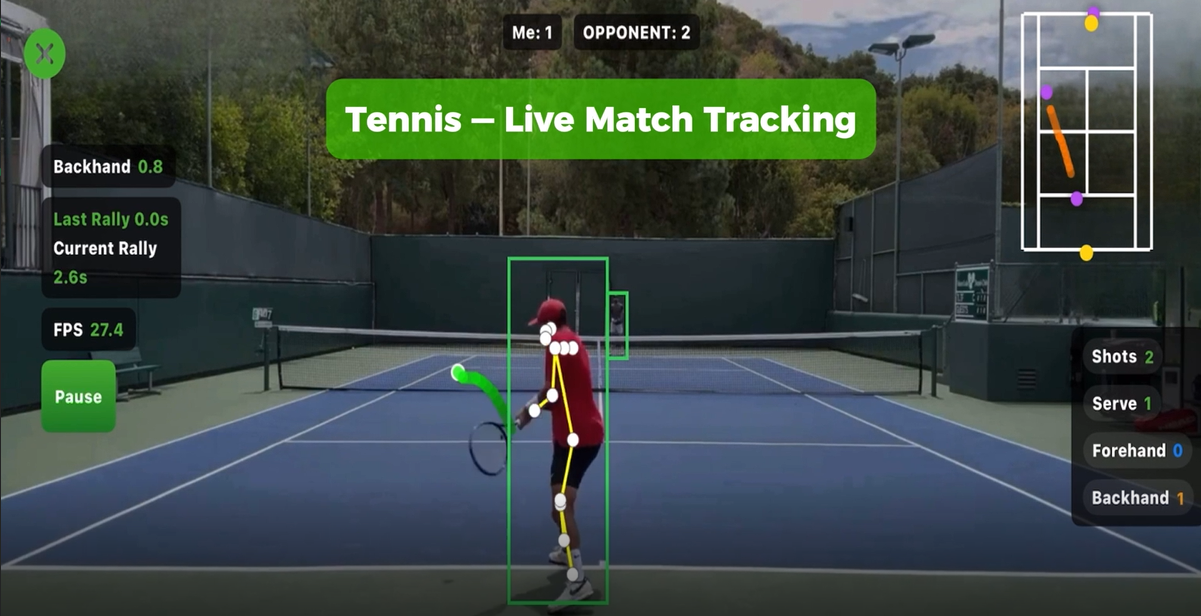
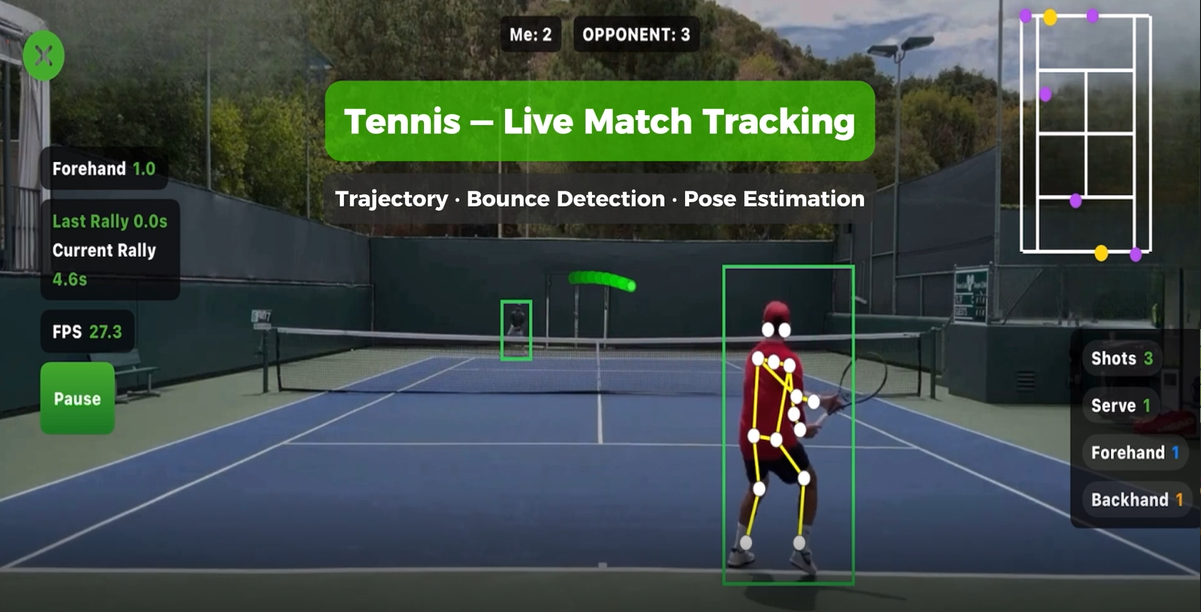
Knowing the exact boundaries of a tennis court is what makes accurate automatic match analytics possible. The tennis court has specific zones including the full playing surface, baselines, sidelines, service lines, center service line, and service boxes on each side. Tracking where the ball lands relative to these zones is what separates a professional analytics system from basic shot tracking. Doing this by eye in fast rallies is where even experienced coaches and line judges make the most mistakes.
SwiftVision.ai maps the entire tennis court surface in real time from the camera feed. Our AI identifies every boundary line on the court including both baselines, both sidelines, both service lines, the center service line dividing the two service boxes, and the left and right service boxes used during serve sequences. Every landing point the ball makes gets matched against this coordinate map instantly. The mapping stays accurate even when the camera shifts slightly or lighting across the court is uneven.
Boundary zone precision means the system knows immediately whether a ball landing on or just outside the baseline or sideline is in play or out. Close line calls that used to cause arguments are resolved automatically. Service box tracking lets the AI verify whether each serve lands in the correct diagonal service box on the opponent side, catching service faults that human line judges frequently miss during fast low serves. Real time line call output delivers the in or out decision right after each bounce so the match continues without interruption and both players see the same result at the same time.
Once the court is mapped correctly, every ball bounce stays tied to the right zone on the surface. This makes reliable point awarding, serve fault rulings, and full match officiating possible without a human line judge standing at the court.
Step 3: Rally Tracking and Player Stroke Analysis
Basic ball detection only tells you where the ball bounced. Full rally tracking reveals how each player struck the ball, how the ball traveled between both sides of the court, and whether any rule was broken during the exchange. This is what makes the difference between a simple camera system and a genuine automated tennis match analytics system.
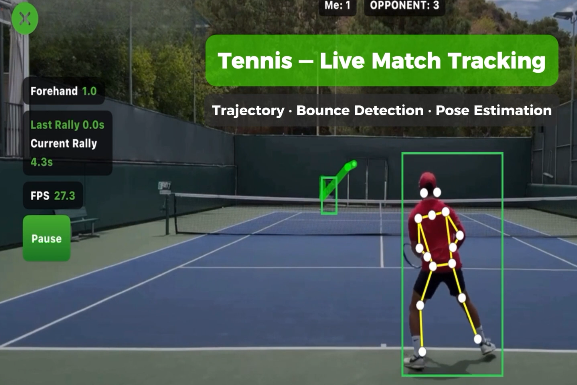
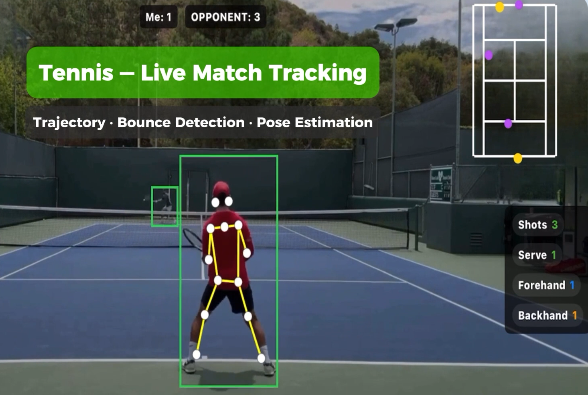
SwiftVision.ai captures complete rally data for every point played. Our tracking follows the ball continuously from the moment it leaves the racket through every bounce until the point ends. We record the serve contact, the ball flight path, the speed off the racket, each bounce location, and the final landing that decides the point. All of this runs automatically from the camera feed with no operator input needed.
Ball trajectory tracking monitors the full path the ball takes across the court during every rally. This lets the system detect net touches, double bounces, and out of order bounce sequences that count as faults under official tennis rules. Serve motion analysis checks whether the ball is tossed correctly before contact, whether the racket hits the ball behind the baseline, and whether the server's feet stay behind the baseline and outside the center mark extension as the rules require. Stroke speed and spin detection records how fast the ball leaves the racket and estimates the spin applied. This data feeds into player performance reports that coaches and players can review after each session.
When you combine rally tracking with court mapping and ball detection, you get the complete match analytics picture. The system knows where every ball landed, how the rally unfolded, and whether any infringement happened. This is how automated tennis match analytics works at a level that actually holds up in competitive matches.
Step 4: Score Event Detection and Match Tracking
Keeping track of scores manually during a tennis match creates room for human error and slows down the game. Players and tournament organizers need accurate point counts, game scores, and set results without relying on a human line judge for every call. SwiftVision.ai handles all of this automatically with its automated tennis match analytics system.
The AI detects every scoring event in real time and updates the scoreboard the moment a point is won. The system tracks which player earned the point, increments the game score accordingly with proper tennis scoring (15, 30, 40, game), and recognizes when a player wins a game and subsequently a set. This applies across all standard formats including best of three and best of five set matches.
Real time point detection means the score appears on screen immediately after each rally ends. No delays, no disputes over manual counting, and no need for a dedicated human scorer at every court. Automatic game and set tracking gives you a full breakdown of every game won and the overall match result as it unfolds. You get complete match records without anyone manually filling in scoresheets. Multi court tournament management lets organizers run many matches at the same time with live score feeds from every court. Staff can focus on the event itself rather than collecting paper results after each match.
When score event detection works alongside ball tracking and player movement analysis, you get rally length data, point win rates, and serve performance statistics. Every training session and competitive match becomes a structured record of performance that coaches and players can review to make real improvements.
Step 5: Player Identification and Stats Tracking
Knowing the score of a match is one thing. Knowing exactly which player won those points and how they did it is what makes coaching and tournament tracking genuinely useful. Club managers need to see win rates, rally patterns, and serve accuracy for each player individually. Doing this with paper records takes too long and the data is never complete.
SwiftVision.ai identifies players through facial recognition and saved player profiles. The system tells players apart even when two people are competing on the same court or wearing similar uniforms. Every point won, every rally played, and every match completed gets automatically connected to the correct player profile without any manual input.
Individual player statistics give you point win rates, serve success percentages, and rally length averages for every registered player in your club. Coaches can finally see who performs consistently and who struggles in longer rallies. Player specific performance history shows how each athlete has progressed across matches, which shot patterns they rely on, and where their weaknesses show up under competitive pressure. This helps players and coaches direct practice time more productively. Club roster integration lets you link detected players directly to profiles in your existing club or tournament management system. Stats can be exported and reviewed without rebuilding any records from scratch.
When player identification runs alongside ball tracking and score event detection, every single point gets tied to a specific athlete. You can compare performance trends between players, monitor development over a season, and use real data when selecting players for competitive team events.
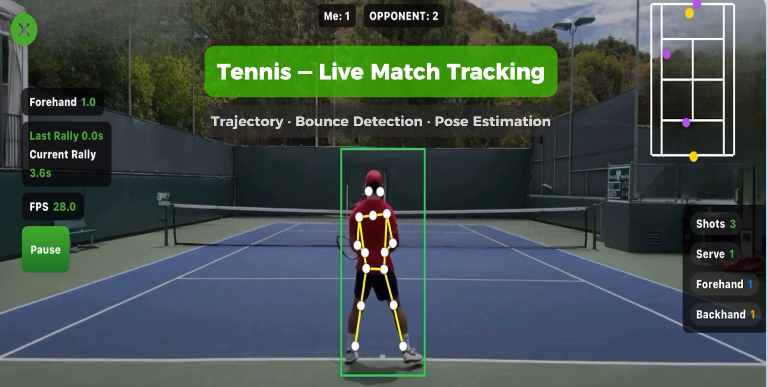
Step 6: Live Dashboard and Performance Statistics
Recording match results is only part of the job. Presenting that data in a way that coaches, players, and tournament organizers can actually use is what creates real value. You need clear dashboards that show rally statistics, serve success rates, and player rankings without manually sorting through scoresheets after every match. SwiftVision.ai delivers exactly that.
The moment a match ends, the AI has already compiled a complete performance report. Point win rates, serve accuracy, average rally length, and game score breakdowns are all organized into clean visual dashboards. Whether you are reviewing a training session with your squad, preparing match reports before a tournament, or sharing results with players after a club night, everything is ready without any extra work.
Live match statistics give you real time point scores, rally counts, and momentum shifts as the match is being played. Coaches and spectators can follow every exchange without waiting for a manual update. Player performance reports let you download a full statistical breakdown for any player in your club. Share serve percentages and rally win rates directly with athletes so they know where to focus their training. Tournament standings update on their own as each match is completed. Run club events and competitive fixtures with live leaderboards that players and parents can check from their phones. API ready integration connects all tennis match data to your existing club management platform, website, or broadcast display. No double entry, no delays, no missing results.
From the opening serve to the final game point, SwiftVision.ai converts raw match footage into clear and actionable tennis performance data. Spend less time managing results and more time coaching players to compete at a higher level.